
The Myth of Lisbon’s Alfama Jewish Quarter
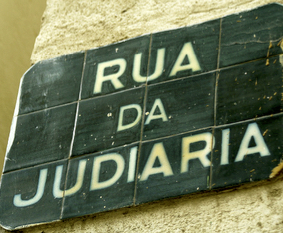
There is a popular myth that the street sign Rua da Judiaria in Lisbon’s Alfama quarter once marked the site of the city’s largest or oldest Jewish quarter. This is not true.
There are at least three other street signs in the historic center of Lisbon that reference the Jewish people. However, none of them are demarcating any of the former Jewish quarters of Lisbon. The city has not yet affixed signs indicating to visitors where the former four Jewish quarters once stood.
It is not always clear how all the streets in the old city of Lisbon got their names. One should not automatically assume that the “Street of the Jews” or the street of the Muslims (Mouros), Rua dos Mouros, signifies former Jewish or Muslim quarters. These streets could have been named after locals with stereotypical traits that earned them nicknames in jest or mockery.
The Alfama is the oldest quarter of Lisbon, because the Alfama survived the ravages of the 1755 Earthquake better than the other quarters. However, no archaeological or historical evidence in the National Archives of Portugal supports the claim that Rua da Judiaria in the Alfama quarter was a Jewish quarter.
After the forced conversion of the Portuguese Jewry at the end of the 15th century, the erasure of Jewish identity commenced: synagogues were converted to churches, Hebrew names changed to Christian names, and Hebrew books and Jewish practice were outlawed. Street names such as Rua da Judiaria were often changed to Rua Nova (New Street), signifying that the street was the Street of the New Christians (Cristãos-Novos), the term for forcibly converted Jews in Portugal.
Judaism was made legal again in March 1821. The street sign Rua da Judiaria in the Alfama quarter was affixed after that, between the late 19th and early 20th centuries.
Because the Alfama is the oldest and best-preserved quarter of Lisbon, many have mistakenly assumed that Rua da Judiaria was the city’s last Jewish quarter, which was established in the Alfama around 1373–1374. This myth has been perpetuated for more than a century by misinformed tour guides, guidebook publishers, and others who repeat what they have been told. The truth is that we do not know where the Alfama Jewish quarter once stood. That information is lost in the pages of our history.
After the 2015 right of return, Portugal offered descendants of Jews forced out of Portugal after the 15th century the opportunity to return. Many Jewish returnees have purchased apartments on Rua da Judiaria in the Alfama, believing they have reclaimed a piece of their former heritage, which leads to the continuation of this myth.
Today, the walls of the Rua da Judiaria are decorated with Judaica affixed by a Jewish Cultural Center, which was established by a Jewish returnee who maintains this myth through his cultural center and tours.
Sadly, tours still take Jewish travelers to this street in the Alfama and tell them it was the last, the largest, or the oldest Jewish quarter of Lisbon—which it was not.
Lisbon’s four main Jewish quarters (Judiarias) before 1496
According to the oldest known and most reliable 14th-century sources, found in the Chelas convent, Lisbon had four main Jewish quarters, or Judiarias, before 1496. There was a fifth Jewish area that was never officially designated as a Jewish quarter.
- Judiaria da Pedreira: Located between the Bairro Alto and Chiado, it had a synagogue by the 13th century. This would be the oldest Jewish quarter of Lisbon.
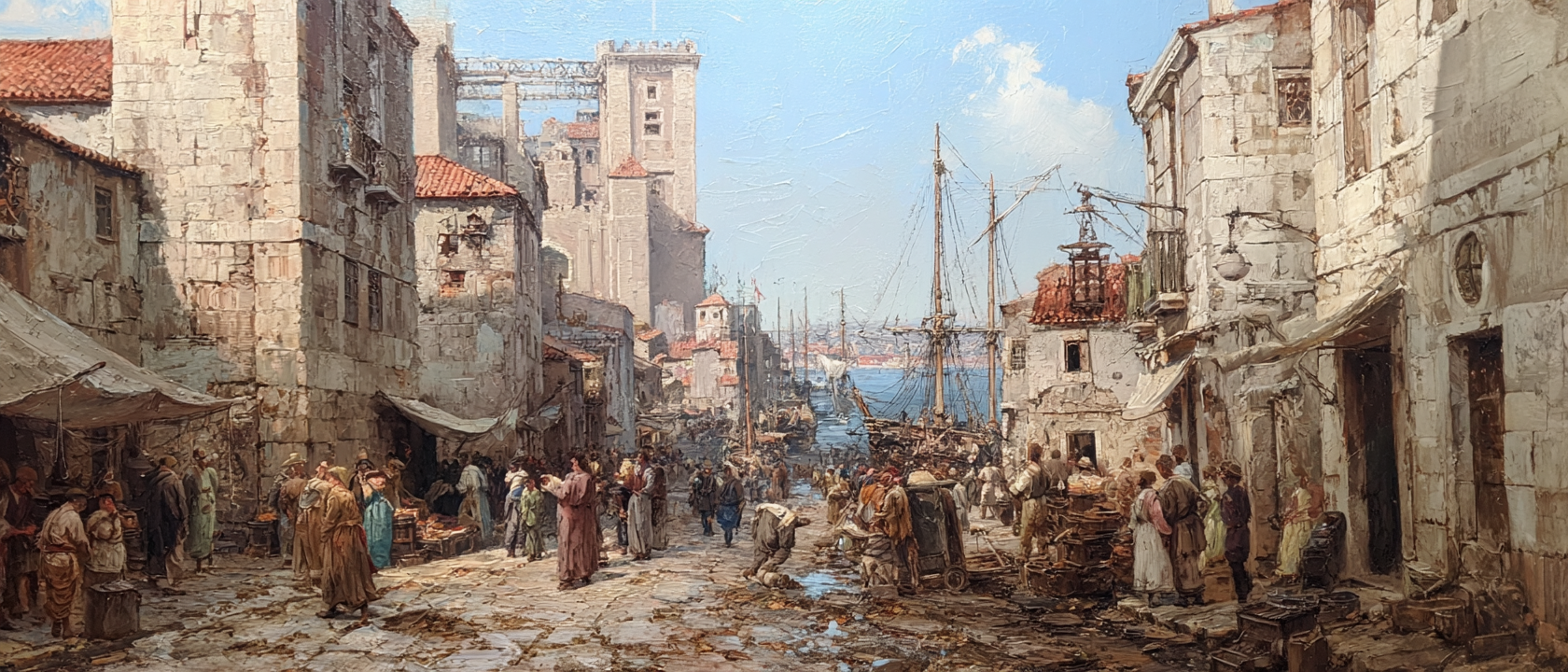
- Judiaria Velha / Grande: The “Old” or “Great” quarter, situated centrally near Rua Nova dos Mercadores and the Church of São Nicolau in the Baixa quarter.
- Judiaria Pequena: The “Small” quarter (also called Judiaria Nova or Judiaria das Taracenas or Judiaria da Moeda) was located between what is now the old Church of São Julião (now the Museum of Money) and the Corpo Santo Church in Baixa.
- Judiaria de Alfama: The Jewish quarter in the Alfama district. Its exact location is unknown.
- In Lisbon’s Bairro Alto in the mid-15th century, a handful of important Jewish merchants, courtiers, and sages built beautiful estates that lasted less than 50 years before the land was confiscated by King João I around 1483. The area was never officially designated as a Jewish quarter, and the name of this Jewish area has not survived.